

Data Governance vs. Data Management: A Clear Comparison
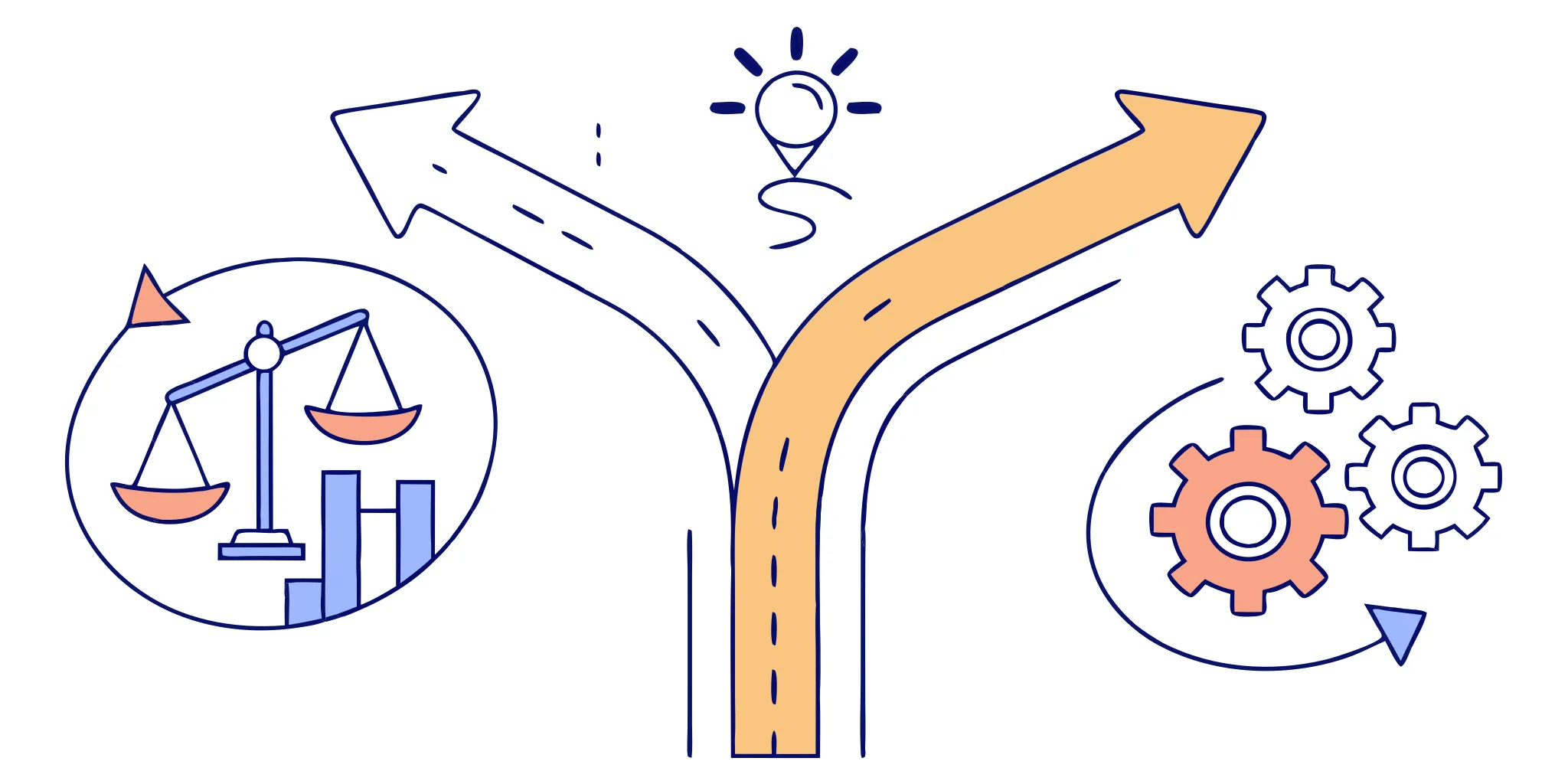
Get a clear, practical breakdown of data governance vs data management, including key differences, roles, and tips for building a strong data strategy.
Runaway cloud costs, brittle data pipelines, and compliance headaches are rarely just technical problems. More often, they are symptoms of a strategic disconnect between what your policies say and what your teams actually do. When the rules for handling data aren't clearly defined or enforced, you end up with engineers spending their time on cleanup instead of innovation and budgets spiraling out of control. The solution starts with clarity. By untangling the roles of setting the rules versus executing the work, you can begin to build a more resilient and cost-effective data operation. This guide breaks down the data governance vs data management distinction to help you regain control.
Key Takeaways
- Think Strategy vs. Execution: Data governance is your strategic rulebook, defining policies for data security, quality, and compliance. Data management is the daily, operational work of putting those rules into action.
- Bridge the Gap Between Policy and Practice: A governance framework is only effective when its rules are built into your daily data management workflows. This integration is what turns strategic goals into automated, compliant operations.
- Automate Governance to Make It Stick: Build your framework on a foundation of clear policies and quality standards, but rely on technology to enforce them. Automating controls within your data pipelines is the only way to ensure compliance and manage risk effectively at scale.
What is Data Governance?
Think of data governance as the constitution for your organization's data. It’s not about the technical, hands-on work of moving or storing data, but about the high-level strategy that dictates how data should be handled. It answers critical questions like: Who can access what data? How is data quality defined and maintained? What security measures must be in place to protect sensitive information? In short, data governance is the framework of policies, standards, and processes that ensures your data is accurate, consistent, and used responsibly.
For large organizations, especially in regulated industries like finance and healthcare, a strong governance program isn't just a good idea—it's essential for maintaining compliance and building trust. It establishes the "who, what, when, where, and why" of your data, creating a system of accountability that guides every decision. By setting these ground rules, you create a clear and defensible strategy for managing one of your most valuable assets. This strategic oversight is what separates well-managed data programs from those that are reactive and chaotic.
The Building Blocks of a Governance Framework
A solid governance framework is your blueprint for managing data assets effectively. It’s a strategic plan that aligns with your core business objectives, ensuring that data practices support your company's goals. The first step is creating clear, comprehensive policies that define how data is collected, stored, used, and protected. This isn't just about writing documents that sit on a shelf; it's about building a practical roadmap that your teams can actually follow.
Your framework should also outline key roles and responsibilities, so everyone knows who owns which data and who is accountable for its quality. Regular audits and validation processes are another crucial component, helping you verify that policies are being followed correctly. Finally, a modern framework integrates technology to automate enforcement and make compliance easier to manage across your entire data ecosystem.
How to Set Policies and Standards
Setting effective policies and standards is all about creating consistency. When everyone follows the same rules, you reduce errors, minimize risk, and make it easier for teams to collaborate. Your policies should be clear, easy to understand, and directly tied to business outcomes. For example, a policy might state that all customer data must be masked before it's used in a development environment to comply with GDPR.
The goal is to create a data governance framework that empowers your teams to make sound decisions independently. Instead of having to ask for permission for every action, they can refer to the established standards. This clarity speeds up projects and ensures that data handling is consistent across departments, from marketing to engineering, without creating unnecessary bottlenecks.
Defining Roles and Responsibilities
A common point of confusion in data initiatives is figuring out who is responsible for what. Data governance clarifies this by defining specific roles. Typically, business leaders take the lead in setting the strategy, as they understand the data's context and its value to the organization. They might serve as data owners, who are ultimately accountable for a specific data domain, like customer or product data.
IT and data engineers then act as data stewards, implementing the policies and managing the technical details. They are the custodians responsible for the day-to-day care of the data, ensuring it meets the quality and security standards set by the data owners. This division of labor ensures that both business needs and technical realities are represented, creating a balanced and effective governance structure.
What is Data Management?
If data governance sets the rules of the road, data management is the act of driving the car. It’s the practical, hands-on work your teams do every day to handle data throughout its entire lifecycle. This includes everything from collecting and storing data to processing and preparing it for analysis.
Effective data management is what turns your governance policies from a document on a server into a living, breathing part of your operations. It ensures that the right data is available to the right people at the right time, all while being accurate, secure, and ready for action. Without solid management practices, even the best governance strategy will fall flat.
Core Processes and Tools
At its heart, data management is about the day-to-day execution of your data strategy. This involves a set of core processes, each supported by specific tools. Key activities include data ingestion from various sources, secure storage in databases or data lakes, and transformation to make it usable for analytics. Your teams likely use ETL (Extract, Transform, Load) or ELT pipelines to move and prepare data, and they rely on everything from traditional databases to modern data warehouses to keep it organized. The goal of these processes is to create a reliable flow of information that the business can depend on for everything from routine log processing to complex AI modeling.
The Underlying Technical Infrastructure
Your data management practices are only as strong as the infrastructure they run on. This technical foundation includes the hardware, software, and network resources used to store, process, and access data. Whether your infrastructure is on-premises, in the cloud, or a hybrid of both, its design has a massive impact on performance, scalability, and cost. A well-architected system ensures data is not only secure but also accessible and useful for decision-making. As data volumes grow and become more distributed, many organizations find that a centralized infrastructure can create bottlenecks, driving them to explore more flexible solutions like a distributed data warehouse to process data closer to its source.
Best Practices for Daily Operations
To keep your data operations running smoothly, it’s crucial to establish clear best practices. This means automating repetitive tasks wherever possible to reduce manual error and free up your engineers for more strategic work. It also involves continuous monitoring of your data pipelines to catch issues before they impact downstream analytics or business operations. Regularly evaluating your tools and processes is just as important. This helps you avoid technological obsolescence and ensures your stack can handle new data sources and evolving business needs. Think of it as preventative maintenance for your entire data ecosystem, designed to keep things efficient, reliable, and cost-effective.
How to Maintain Data Quality
Maintaining high-quality data is a non-negotiable part of data management. This is where the rubber meets the road for your governance policies. It involves implementing practical steps to ensure your data is accurate, complete, and consistent. Common practices include data cleansing to fix errors, data validation to check new information against predefined rules, and data profiling to understand its condition. Establishing clear procedures for handling data quality issues is key. This ensures problems are not just fixed but also traced back to their root cause, preventing them from happening again. Strong data management helps enforce security and governance rules automatically, making compliance a natural outcome of your daily operations.
Data Governance vs. Data Management: What's the Difference?
It’s easy to use the terms “data governance” and “data management” interchangeably, but they represent two distinct—though deeply connected—functions. Think of it this way: data governance sets the strategy, and data management executes it. Governance defines the rules of the game, while management is how you play it day-to-day. Understanding the difference is the first step toward building a data framework that is secure, compliant, and efficient, especially in complex, distributed environments. When you get this right, you create a system where data is not just a resource but a reliable, well-protected asset. Let's break down the key distinctions.
Strategy vs. Operations
Data governance is the strategic layer. It’s where you define the high-level policies, standards, and rules for how data should be handled across the organization. It answers questions like: Who can access this data? How should it be classified? What are our data quality standards? Data management, on the other hand, is the operational execution of that strategy. It involves the hands-on processes and technical work of acquiring, storing, protecting, and processing data throughout its lifecycle. Governance provides the blueprint; management builds the house.
Making the Rules vs. Following Them
A simple way to think about the difference is to see data governance as the body that makes the laws and data management as the team that follows them. Your governance framework establishes the official policies for data usage, security, and compliance. For example, a governance policy might state that all personally identifiable information (PII) must be masked before it enters an analytics pipeline. Data management is the act of implementing the tools and workflows to actually perform that masking on a daily basis, ensuring the rules are consistently applied to every relevant data set.
Ensuring Compliance vs. Managing Daily Tasks
Data governance has a strong focus on meeting external regulations and internal business rules. Its primary goal is to ensure data is handled in a way that is compliant, secure, and trustworthy. This is where you address requirements like GDPR, HIPAA, and data residency. Data management focuses on the technical tasks required to make that happen, such as data cleansing, backup and recovery, and database administration. While governance is concerned with the why (e.g., "we must protect customer data to meet regulations"), management is concerned with the how (e.g., "we will use these encryption methods and access controls"). This is where robust security and governance controls become critical.
Who's Accountable for What?
The roles and responsibilities for governance and management typically fall to different teams. Data governance is usually led by business stakeholders—data owners, data stewards, and chief data officers—with input from IT and legal. They are accountable for the overall data strategy and its business impact. Data management is primarily the domain of technical teams. Data engineers, architects, and database administrators are the ones responsible for the technical infrastructure and the day-to-day work of keeping data pipelines running smoothly and efficiently, whether you're doing log processing or managing a distributed data warehouse.
Bringing Governance and Management Together
Think of data governance and data management as two sides of the same coin. You can’t have one without the other if you want a data strategy that actually works. Governance provides the blueprint—the rules and policies—while management builds the house, handling the day-to-day operations. When you bring them together, you create a powerful, cohesive system where your high-level goals are directly supported by your daily technical processes. This alignment is what turns a reactive data environment into a proactive, strategic asset for your business.
Create an Integrated Strategy
An effective data strategy doesn’t treat governance and management as separate functions. Instead, it weaves them together. Your governance framework sets the direction by defining what data is important, who can use it, and how it should be protected. Your data management plan then puts that direction into action, implementing the tools and processes to collect, store, and use data according to the rules. Good data governance clarifies how data should be managed, and solid data management is only possible when you have clear governance rules to follow. This integrated approach ensures your daily operations consistently support your broader business and compliance objectives.
Establish the Right Controls
A governance framework is just a document until you translate its policies into real-world controls. This is where you build the guardrails for your data pipelines. Establishing the right controls means creating clear, enforceable procedures for data access, security, and usage. It’s not about locking data down; it’s about enabling people to use it safely and effectively. By embedding these controls directly into your data workflows, you can automate compliance and reduce risk. For instance, you can implement security and governance measures that automatically mask sensitive information or restrict data movement based on residency requirements, ensuring policies are followed without manual intervention.
Encourage Cross-Functional Collaboration
Data doesn’t belong to a single department—it’s a shared company asset. A successful data program requires breaking down the silos between your IT, compliance, legal, and business teams. When everyone has a seat at the table, you can create governance policies that are both robust and practical. Business users can provide context on how data is used, while IT can explain the technical feasibility of implementing controls. This collaboration ensures that the rules make sense for the people who use the data every day, leading to better adoption and more reliable outcomes.
Integrate Your Technology
Trying to enforce governance manually across complex data ecosystems is a recipe for failure. It’s slow, inconsistent, and simply doesn’t scale. The right technology is essential for bridging the gap between your governance policies and your management practices. Look for tools that can automate the enforcement of your rules directly within your data pipelines. By integrating your technology stack, you can ensure that governance isn’t an afterthought but a built-in feature of your data operations. This is why choosing Expanso can make a difference, as it allows you to process data where it lives, applying governance rules at the source for greater efficiency and control.
Common Challenges to Watch Out For
Even with a clear strategy, bringing data governance and management together isn't always a smooth ride. It’s a continuous effort that requires you to anticipate and address potential roadblocks before they disrupt your operations. From ensuring data integrity across distributed systems to keeping up with new regulations, staying ahead of these issues is key. By understanding the common hurdles, you can build a more resilient framework that supports your business goals instead of holding them back. Let’s walk through some of the most frequent challenges you’re likely to encounter and how to think about them.
Maintaining Data Quality and Consistency
One of the biggest hurdles is simply keeping your data clean, accurate, and consistent, especially as it moves between different systems and teams. When data is duplicated, incomplete, or just plain wrong, it undermines everything you’re trying to achieve. Common issues include defining clear data ownership, ensuring security, and integrating new technologies without disrupting existing workflows. Establishing a single source of truth becomes incredibly difficult when data lives in multiple clouds, on-premise servers, and at the edge. The key is to implement quality checks and cleansing processes as far upstream as possible, catching errors at the source before they can pollute your analytics and AI models.
Meeting Regulatory Demands
The regulatory landscape is constantly shifting, and keeping your data practices compliant is a full-time job. Regulations like GDPR, HIPAA, and others come with strict rules about data residency, privacy, and cross-border transfers. Failing to comply can lead to hefty fines and damage to your reputation. Your governance framework must be agile enough to adapt to these evolving requirements. This means building compliance directly into your data pipelines, not treating it as an afterthought. A strong security and governance posture ensures you can enforce policies automatically, making it easier to prove compliance and manage data across different jurisdictions without centralizing everything.
Keeping Stakeholders Aligned
Data governance isn’t just an IT problem; it’s a business-wide initiative. A common reason that governance programs fail is a lack of buy-in from key stakeholders across different departments. If business leaders don’t understand the value of governance or see it as a roadblock to getting their work done, they won’t support it. To get everyone on the same page, you need to frame governance in terms of business value. Show them the risks of not having it—like flawed analytics or compliance penalties—and demonstrate how a well-governed data environment actually helps them make faster, more reliable decisions.
Planning for Scale
As your organization grows, so does your data. A governance framework that works for a terabyte of data might crumble when faced with petabytes streaming in from IoT devices, logs, and new applications. Many traditional data stacks are too centralized to handle the demands of modern, distributed environments. This can lead to network bottlenecks, slow processing times, and an inability to run analytics where the data is generated. Your governance and management strategies must be designed to scale. This involves choosing a flexible architecture that can process data efficiently, whether it’s in the cloud, a local data center, or at the edge.
How to Build an Effective Framework
Building a data governance framework from the ground up can feel like a massive undertaking, but it’s really about taking a series of deliberate, logical steps. The goal is to create a system that’s both comprehensive and practical for your teams to follow. Think of it as creating a clear rulebook for your data, ensuring everyone knows how to handle it responsibly. This framework will serve as your organization's single source of truth for data policies, standards, and procedures, turning abstract goals into concrete actions. By focusing on these core components, you can build a structure that supports your business objectives while managing risk.
Establish Clear Policies
Your first step is to create a set of clear, unambiguous policies. This is the foundation of your entire framework. A robust governance plan involves creating comprehensive policies, procedures, and standards for managing your data assets. This ensures that every stakeholder, from data engineers to business analysts, understands their specific roles and responsibilities. Start by documenting rules for data access, usage, security, and residency. Who can access sensitive customer information? How should data be handled to comply with regulations like GDPR or HIPAA? Clearly defining these rules eliminates guesswork and creates a culture of accountability. This is where you can implement strong security and governance controls from the start.
Set Quality Standards
Once your policies are in place, you need to define what "good data" looks like for your organization. Establishing quality standards is crucial for maintaining the integrity and reliability of your data. This goes beyond simply checking for errors; it’s about ensuring your data is consistent, accurate, and fit for its intended purpose. Proactively enforcing these standards helps you identify and mitigate data risks early, track data lineage, and standardize processes across the board. When your teams can trust the data they’re working with, they can generate more reliable analytics, build better AI models, and make smarter business decisions without spending most of their time on data prep and cleaning.
Define Your Metrics and Monitor Progress
A framework is only effective if you can measure its impact. Defining clear metrics allows you to assess how well your data governance initiatives are performing and demonstrate their value to the organization. Are you seeing a reduction in data-related errors? Is the time it takes to get insights from your data decreasing? Key performance indicators (KPIs) could include data quality scores, the number of compliance incidents, or even cost savings from more efficient data processing. By streamlining governance, you can focus on strategic data use without sacrificing security. Regularly tracking these metrics helps you make adjustments and prove the ROI of your governance efforts.
Develop a Risk Management Plan
Finally, a proactive risk management plan is essential for protecting your organization from potential threats. Companies that rely on manual governance or lack a cohesive strategy often face ongoing challenges with compliance, security, and runaway storage costs. Your plan should identify potential data-related risks—like security breaches, compliance violations, or data loss—and outline specific steps to mitigate them. This includes implementing controls for data residency, masking sensitive information, and ensuring auditability. A well-defined plan helps you address these challenges head-on, ensuring your distributed data warehouse and other systems remain secure and compliant.
The Right Tools for the Job
Having the right strategy is one thing, but executing it requires the right technology. Your data governance and management framework is only as strong as the tools you use to support it. These platforms help automate processes, enforce policies, and give your teams the visibility they need to handle data responsibly. The goal is to find a tech stack that bridges the gap between your high-level governance rules and the day-to-day operational realities of data management.
Data Catalogs and Metadata Tools
Think of a data catalog as a searchable inventory for all your company's data. It doesn't hold the data itself, but it holds the metadata—information about your data. This is where you document everything from data dictionaries and business glossaries to ownership and lineage. A well-maintained data catalog helps your teams find, understand, and trust the data they're working with. It’s a foundational tool for governance because it provides the context needed to apply policies correctly and consistently across the organization.
Quality Management Solutions
While governance sets the standards for data quality, management tools are what actually get the job done. These solutions are designed to profile, cleanse, and monitor your data to ensure it meets the criteria you’ve established. They automate the process of identifying duplicates, correcting errors, and validating information before it enters your critical systems. By embedding data quality checks directly into your pipelines, you can catch issues early and prevent them from derailing your analytics and AI projects.
Compliance Monitoring Systems
For any organization dealing with sensitive information, compliance isn't optional. Compliance monitoring systems help you automatically enforce the rules defined in your governance framework, especially those related to regulations like GDPR, HIPAA, or CCPA. These tools can track data access, manage consent, and enforce data residency policies to ensure data is processed only where it’s allowed. They provide an auditable trail of how data is used, which is essential for demonstrating regulatory compliance and protecting your organization from risk.
Collaboration Platforms
Data governance is a team sport. It requires input and cooperation from business users, IT teams, legal departments, and data analysts. Collaboration platforms provide a centralized space for these different stakeholders to communicate and work together. They help streamline workflows for things like defining business terms, resolving data quality issues, and approving access requests. Fostering cross-functional collaboration ensures that everyone is aligned on policies and that the rules are enforced consistently across all systems and departments.
Related Articles
- Expanso Security & Governance | Compliance by keeping data where it is
- Expanso Solutions | Compute Over Data & Distributed Computing
- Expanso | Distributed Data Warehouse Solutions
- Expanso | Distributed Computing Solutions - Bring Compute To Where Data Is
- Expanso | Distributed Computing Solutions - Bring Compute To Where Data Is
Frequently Asked Questions
We're great at managing our data technically. Do we really need a formal governance program? That's a common question. Think of it this way: excellent data management without governance is like having a team of skilled builders with no architect or blueprint. They can build things, but they might not be the right things, and they won't connect properly. Governance provides that essential blueprint. It ensures all that great technical work is consistent, compliant, and directly supports your business goals, preventing costly rework and security risks down the line.
Who should actually own data governance? Is it an IT or a business responsibility? It’s a partnership, not a one-sided responsibility. Business leaders should own the strategy because they understand the data's context and its value. They set the rules based on business needs and regulatory requirements. IT and data teams then act as the stewards, taking responsibility for implementing the tools and processes to enforce those rules. When IT tries to own governance alone, the rules often lack business context; when the business tries, they can miss the technical realities. Success happens when they work together.
Building a framework from scratch seems overwhelming. What's the most important first step? Don't try to boil the ocean. The best first step is to start small with a high-impact area. Pick one critical data domain, like customer or product data, that everyone agrees is important. Focus on defining clear ownership, quality standards, and access policies just for that domain. This allows you to create a quick win, demonstrate the value of governance to stakeholders, and build a repeatable model you can then apply to other areas of the business.
How does this change when our data is distributed across the cloud, on-prem, and the edge? When your data is everywhere, a strong governance framework becomes even more critical. A traditional, centralized approach where you move all data to one place for processing simply won't work—it's too slow, expensive, and risky. Instead, your strategy must adapt to enforce rules and policies at the source, wherever your data lives. This means implementing controls that can manage data residency, security, and quality directly at the edge or in different cloud environments, ensuring compliance without creating bottlenecks.
What's the most common reason data governance initiatives fail? The biggest pitfall is treating governance as a purely technical or compliance-focused project. When it's framed as just another set of rules from IT or legal, business teams see it as a roadblock. Successful initiatives are always tied directly to business value. You have to clearly show how good governance leads to more reliable analytics, faster decision-making, and reduced operational risk. Without that buy-in from business stakeholders, the program will lack the support it needs to stick.
Ready to get started?
Create an account instantly to get started or contact us to design a custom package for your business.


